Surfaces Built to Carry Weight and Drain Correctly
Driveways in Hot Springs for properties needing stable access that prevents rutting and water pooling
Atlas Excavating builds gravel and prepared driveway surfaces for residential and commercial properties across Hot Springs and Central Arkansas, addressing issues where existing drives have developed ruts, poor drainage, or unstable bases that fail under vehicle weight. The work involves grading the path to direct water away from structures, preparing a compacted base layer that won't shift under load, and applying surfacing material selected for the property's use and soil conditions. Property owners typically need this service when unpaved access becomes impassable during rain, when delivery trucks create deep ruts in soft ground, or when water runs toward buildings instead of away from them.
Durable driveway construction starts with evaluating the existing grade and soil stability, then excavating to establish proper slope and drainage pathways before base material goes down. Professional equipment compacts each layer to prevent settling, and the final surface—whether crushed stone, gravel, or prepared aggregate—is graded to maintain the drainage plane while providing traction and load distribution. Climate in this region means planning for heavy spring rain and clay soil expansion, so base depth and material selection adjust based on expected traffic and site-specific drainage challenges.
Request a customized driveway estimate to review grading requirements and surface options for your property.
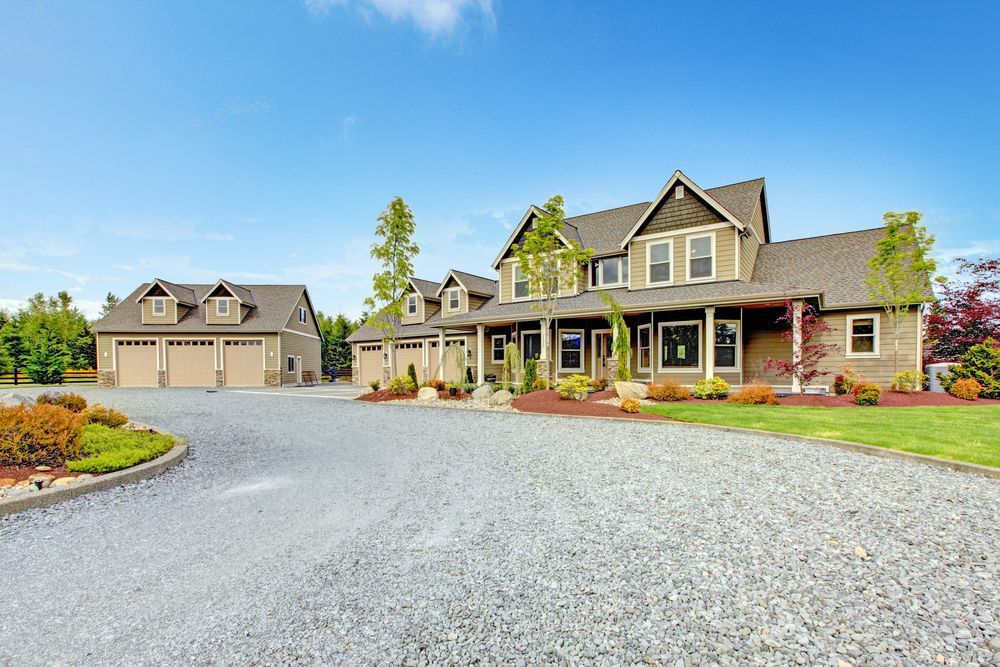

What Proper Base Preparation Accomplishes
Correct driveway construction involves stripping unstable topsoil, establishing cross-slope for runoff, and compacting aggregate base in lifts that lock together under weight rather than shifting when vehicles turn or brake. Professional equipment ensures consistent compaction across the width of the drive, which prevents the surface from sinking unevenly or developing soft spots where water infiltrates the base layer.
After the driveway is finished, you'll notice water moves off the surface instead of pooling in tire tracks, vehicles no longer create ruts during wet weather, and the surface remains firm under load from delivery trucks or equipment. The graded plane directs runoff into ditches or natural drainage paths rather than allowing it to run toward foundations or landscape beds, and the base resists settling because it's been compacted to density specifications rather than simply spread and left loose.
New installations involve full excavation and multi-layer base preparation, while replacements may reuse portions of the existing base if it's stable and well-drained. Access road improvements often extend existing drives to reach outbuildings, cleared land, or utility connections, requiring matching of grades and materials to maintain consistent drainage and surface performance across the entire route.
Questions Before Starting Your Project
Driveway projects vary based on length, soil conditions, and intended use, so property owners often ask about material choices, grading methods, and how the work addresses their specific drainage concerns.
What determines the depth of base material required?
Soil type and expected vehicle weight dictate base depth—soft clay soils and heavy truck traffic require deeper aggregate layers than stable soil supporting passenger vehicles, and the base must extend below the frost line to prevent heaving in winter.
How does grading prevent water from reaching the house?
The driveway surface is sloped away from structures at a minimum grade that moves water toward ditches or drainage channels without creating erosion, and cross-slope prevents water from running down the center of the drive where it would accumulate and weaken the base.
What's the difference between gravel types used for driveways?
Crushed angular stone locks together under compaction and resists rutting better than rounded river gravel, and gradation—the mix of stone sizes—affects how tightly the surface packs and whether fines migrate into the base layer during rain.
When should a driveway be replaced rather than resurfaced?
Replacement becomes necessary when the base has failed and allows rutting deeper than the surface layer, when drainage problems cause standing water that can't be corrected by regrading alone, or when the existing path is too narrow or poorly aligned for current use.
How long does installation take for a typical residential driveway?
Most residential driveways in Hot Springs require two to four days depending on length and site conditions—excavation and base preparation happen first, followed by compaction and final surfacing once the base has been inspected and approved.
Atlas Excavating prepares driveway surfaces that handle the load and weather conditions common to properties in this region, using equipment that delivers consistent compaction and grade control. Schedule a site evaluation to review your access requirements and drainage conditions.