Foundations Start with Correct Ground Conditions
Site Preparation in Hot Springs for properties where construction begins after land is cleared and graded
Before builders frame walls or pour concrete, the ground beneath must be cleared of vegetation, graded to proper elevations, and compacted to support structural loads without settling. Atlas Excavating handles the excavation and grading work that establishes stable building pads, manages drainage away from foundations, and creates access routes for construction equipment. Properties with slopes, heavy vegetation, or uneven terrain require more extensive shaping than flat, cleared lots—the site preparation process adjusts based on existing topography and what the finished project requires.
Site preparation begins with clearing trees, stumps, and organic material that would decompose under foundations and cause settling. Excavation removes or redistributes soil to achieve design elevations, creating level building pads and sloped areas that direct water away from structures. Compaction follows—loose or disturbed soil is mechanically compressed to increase density and load-bearing capacity, preventing foundations from shifting or cracking after construction is complete.
Request a site preparation estimate to review your property's grading requirements and construction timeline.
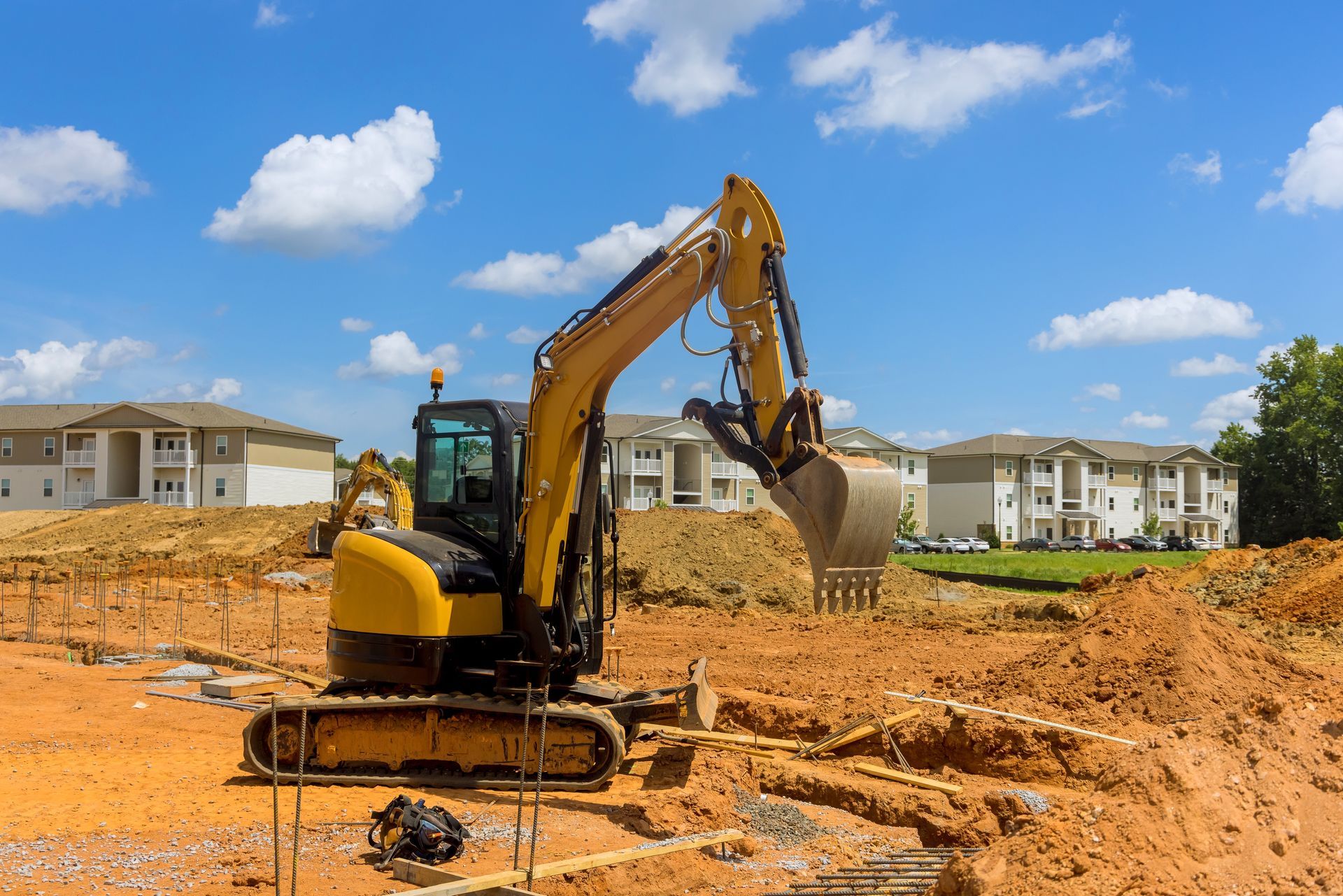

How Site Preparation Addresses Foundation Stability
The process involves removing unsuitable material such as topsoil, organic debris, and loose fill, then shaping the remaining soil to design grades using excavators and grading equipment. Compaction happens in lifts—layers of soil are spread, moistened to optimal water content, and compacted with vibratory rollers or plate compactors before the next layer is added. This approach creates uniform density throughout the building pad, so foundations settle evenly rather than cracking due to differential movement.
Once site preparation is complete, your property has a level building pad graded to precise elevations, with surface water draining away from the foundation area toward designated collection points or natural drainage paths. The ground is firm underfoot rather than soft or spongy, indicating proper compaction that will support concrete slabs, footings, and structural loads. You'll also notice defined access routes for construction vehicles, material staging areas, and utility corridors excavated to required depths.
Coordination with builders and project schedules keeps excavation, grading, and utility installation progressing without delays that stall subsequent construction phases. Atlas Excavating works closely with contractors to ensure the site is ready when framers, concrete crews, and utility installers arrive, maintaining momentum throughout the project. Attention to drainage details during grading prevents water from pooling near foundations or washing across exposed soil during construction.
What Property Owners Usually Ask
Site preparation questions often focus on timelines, soil conditions, and coordination with other contractors.
What happens during initial clearing?
Vegetation, stumps, roots, and organic material are removed from the building footprint and surrounding work areas. Cleared material is either hauled off-site or stockpiled for later use, depending on project requirements and local regulations.
How is the building pad created?
Excavation removes high spots and fills low areas to achieve design elevations, creating a level surface graded according to engineering plans. The pad extends beyond the building footprint to provide working space for construction equipment and material storage.
Why does compaction matter?
Uncompacted soil settles under the weight of foundations and structures, causing cracks, uneven floors, and structural movement. Proper compaction increases soil density so it supports loads without significant settling after construction is complete.
What site conditions affect preparation work?
Rocky soil, high water tables, and steep slopes require additional excavation or specialized equipment compared to flat, well-drained sites. Properties in Hot Springs with clay soils may need moisture management during grading to achieve proper compaction levels.
When should site preparation be scheduled?
Coordination with your builder determines timing—site work must be complete before foundation crews arrive, but scheduling too early can expose graded areas to erosion if construction is delayed. Dry weather conditions improve efficiency and reduce soil disturbance during excavation.
Atlas Excavating coordinates site preparation activities with your project schedule and builder requirements to keep construction moving forward. Reach out to discuss your property's grading needs and timeline expectations.