Access Routes That Support Heavy Use
Infrastructure Services in Hot Springs for developers and contractors planning road construction or large-scale site development
Road construction, commercial land clearing, and site development for industrial or municipal projects require equipment capacity and grading precision that residential excavation doesn't demand. Atlas Excavating supports developers, general contractors, and municipalities with excavation, grading, drainage installation, and access road construction for projects ranging from subdivision infrastructure to commercial building sites. Large-scale clearing involves removing timber and vegetation across multiple acres, shaping detention basins that manage stormwater runoff, and establishing base grades for roads that will carry heavy equipment and delivery trucks throughout construction and beyond.
Infrastructure work begins with clearing and grubbing to remove all vegetation, stumps, and organic material from the development footprint, followed by mass grading that redistributes soil to create building pads, drainage corridors, and road alignments. Road construction involves excavating roadbeds to subgrade elevation, installing drainage culverts and stormwater structures, then building up base layers of compacted aggregate that support asphalt or concrete pavement. Each phase requires coordination with project schedules so utilities, paving crews, and building contractors can proceed without delays caused by incomplete site work.
Discuss upcoming infrastructure projects to evaluate excavation requirements and project timelines.
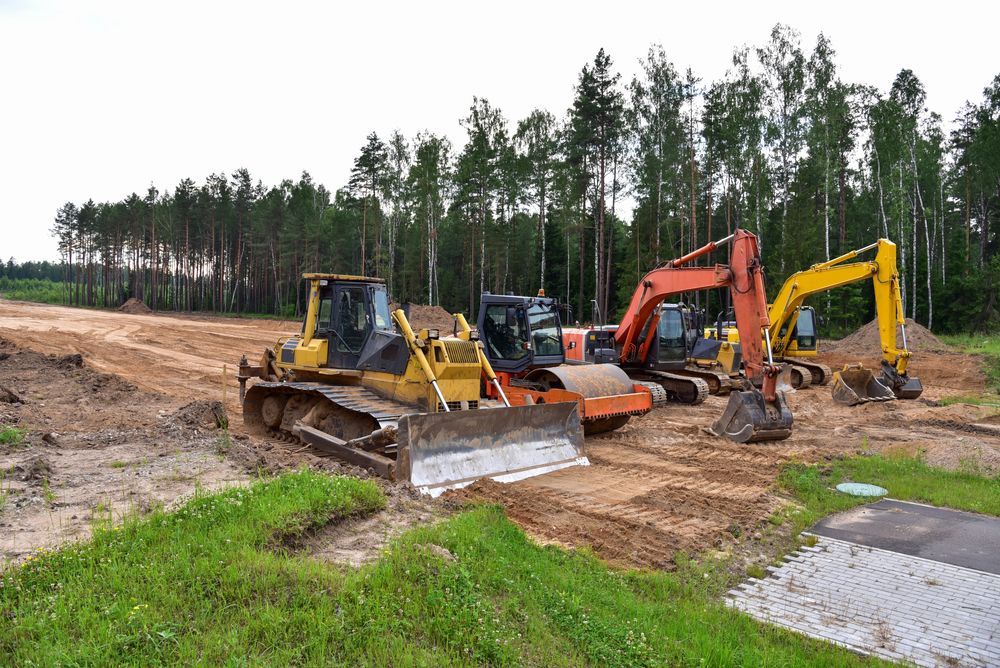

What Large-Scale Site Development Actually Accomplishes
Clearing operations use excavators and bulldozers to remove standing timber, push debris into burn piles or haul-off areas, and grub stumps and root systems that would interfere with grading work. Once cleared, rough grading shapes the site to design elevations—cut areas are excavated and material is moved to fill areas, creating level building pads and sloped surfaces that direct water toward detention basins or drainage swales. Compaction throughout fill areas prevents settling that would damage roads, utilities, or structures built on top.
After infrastructure development, your site has defined access roads with compacted bases ready for paving, graded building pads at finished elevations, and stormwater management systems that handle runoff from developed areas. Erosion control measures such as silt fencing and sediment basins remain in place until vegetation establishes or permanent surfaces are installed. Roads provide stable access for construction traffic without rutting or creating mud during wet weather, keeping projects on schedule regardless of rainfall.
Project management involves sequencing excavation, grading, drainage, and road construction to support the overall development timeline. Atlas Excavating coordinates with utility contractors installing water, sewer, and electrical infrastructure so trenching and backfilling integrate with site grading rather than disrupting finished work. Efficient scheduling minimizes weather delays and keeps subcontractors moving through their scopes without waiting for site conditions to improve.
Questions Before Starting Your Project
Developers and contractors typically ask about equipment capacity, timeline coordination, and site-specific challenges before beginning infrastructure work.
What does land clearing include?
All vegetation, trees, stumps, and root systems are removed from the development area, along with any existing structures, debris, or unsuitable soil that would interfere with construction. Cleared material is disposed of off-site or processed for reuse depending on project specifications.
How are access roads constructed?
Roadbeds are excavated to subgrade, then built up with layers of compacted aggregate base material that distributes traffic loads and prevents rutting. Drainage structures are installed before base construction begins, ensuring water doesn't undermine the roadbed during or after construction.
What drainage work is involved?
Detention basins, culverts, drainage swales, and stormwater inlets are installed to manage runoff from developed areas and prevent flooding downstream. Proper drainage design prevents erosion and keeps roads and building pads dry during heavy rainfall common in central Arkansas.
Why does grading precision matter?
Roads, utilities, and buildings require specific elevations and slopes to function correctly—improper grading causes drainage problems, utility conflicts, and rework that delays construction. GPS-guided equipment maintains grade accuracy across large sites where elevation control is critical.
How is project scheduling managed?
Excavation and grading phases are coordinated with utility installation, paving schedules, and building construction timelines to keep subcontractors progressing without waiting for site conditions. Dependable scheduling reduces downtime and prevents weather delays from cascading through the project.
Atlas Excavating handles infrastructure projects of varying scale, from single-phase residential subdivisions to multi-acre commercial developments. Schedule a project consultation to review site plans and discuss excavation requirements.