Sites Ready for Development Without Delays
Land Clearing in Hot Springs for properties where trees, brush, and vegetation must be removed before construction begins
Undeveloped land covered with trees, dense brush, or overgrown vegetation can't be built on until the site is cleared to bare ground, graded, and prepared for the next phase of work. Atlas Excavating removes vegetation and debris to prepare land for residential construction, commercial development, and infrastructure projects, using equipment that clears efficiently without causing unnecessary soil disturbance that complicates later grading. Properties throughout Hot Springs and surrounding areas often require clearing before site plans can be executed, whether that's opening space for a new home, expanding a commercial lot, or creating access corridors for utilities and roads.
Land clearing involves cutting and removing trees, grinding or extracting stumps, clearing brush and undergrowth, and hauling debris off-site or processing it into mulch depending on project requirements and local regulations. Efficient equipment minimizes the time between clearing and the start of grading or construction, which matters when projects are sequenced tightly or when permitting timelines require progress within specific windows. Responsible site cleanup means the property is left free of debris piles, tripping hazards, and vegetation that would interfere with survey work or equipment access.
Request a land clearing estimate to understand what removal and cleanup will involve for your site.
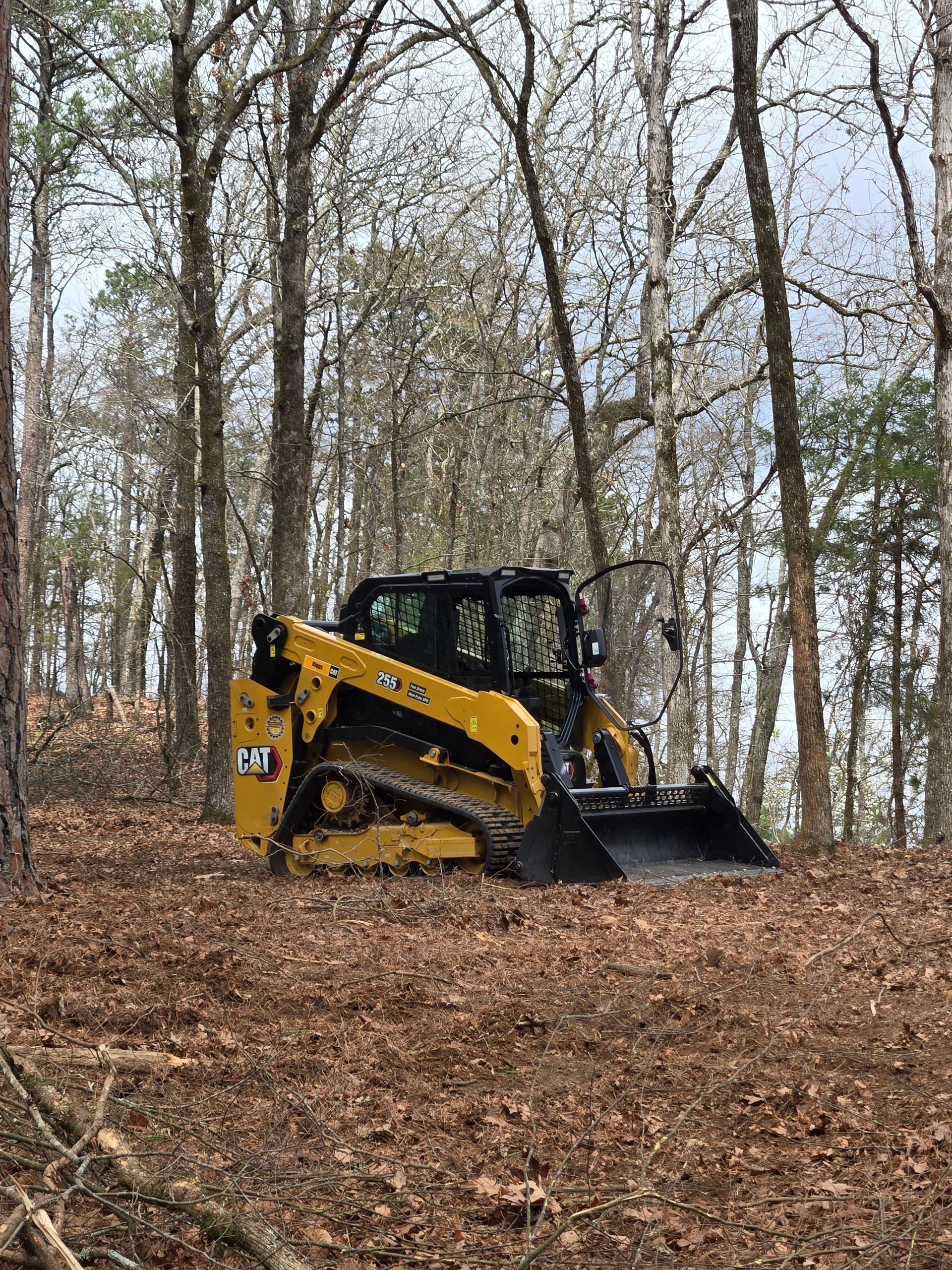

What Efficient Clearing Delivers to the Project
Clearing equipment ranges from skid steers with brush cutters for light vegetation to excavators with grapples and forestry attachments for large trees, and selecting the right machinery for the density and size of vegetation determines how quickly the site can be processed. Operators work to preserve topsoil where it will be reused, avoid damaging trees or features that are staying, and stage debris for removal without blocking access needed for the next construction phase.
After clearing is finished, the site is open and accessible with vegetation removed down to ground level, stumps extracted or ground below grade so they won't interfere with grading, and debris cleared so survey crews, equipment operators, and contractors can move freely across the property. You'll notice sight lines that allow you to visualize the layout of buildings or improvements, ground that's ready for grading equipment without obstructions, and a clean site that signals readiness for the next phase rather than leaving piles of brush or half-removed stumps that delay progress.
Site preparation following clearing often includes rough grading to establish drainage patterns, erosion control measures if the property will sit exposed for weeks or months before construction starts, and coordination with engineers or surveyors who need access to verify elevations and boundaries. Residential construction, commercial site development, and infrastructure projects all depend on complete clearing that doesn't leave problems for the next contractor to solve or slow down the project timeline.
Common Questions About This Service
Clearing projects vary based on vegetation density, site size, and what the land will be used for, so questions often focus on debris removal, stump handling, and how the work prepares the site for grading.
What happens to the trees and brush after they're cut?
Debris is hauled off-site to disposal facilities, chipped into mulch if the project includes landscaping that can use it, or burned in accordance with local regulations if air quality and permitting allow—removal method depends on volume, project budget, and what's practical for the location.
How are stumps removed so they don't interfere with grading?
Stumps are either ground below the depth of planned grading, which leaves roots in place but removes the stump to several inches below grade, or fully extracted with an excavator if the site will be excavated or if roots would interfere with underground utilities.
When is selective clearing better than clearing everything?
Selective clearing preserves trees or vegetation that provide shade, erosion control, or aesthetic value, and it's used when site plans call for integrating natural features rather than starting with a blank slate—this requires more precision and time than wholesale clearing.
How does clearing affect future grading and drainage work?
Clearing removes surface obstructions and exposes the existing grade, which allows operators to see natural drainage patterns and soil conditions that inform grading decisions, and removing deep-rooted vegetation reduces the risk of future settling where roots decay and leave voids.
What's involved in site cleanup after clearing is complete?
Cleanup includes removing debris piles, raking or grading the surface to eliminate ruts left by equipment, and ensuring no stumps, root balls, or brush remain that would obstruct survey or construction work in Hot Springs.
Atlas Excavating clears land across Central Arkansas for residential, commercial, and infrastructure projects, delivering sites ready for grading or construction without delays caused by incomplete removal or leftover debris. Contact Atlas Excavating to schedule a site visit and review clearing requirements for your property.