Ground Prepared for What Comes Next
Excavation in Hot Springs for sites requiring precise digging before construction or utility installation begins
Excavation involves removing soil to create level building pads, trenches for utilities, basins for ponds, or clearings for infrastructure development, using equipment operated by professionals who understand grade tolerances, soil behavior, and how to avoid damaging underground utilities or adjacent structures. Atlas Excavating handles excavation for residential, commercial, and infrastructure projects across Hot Springs and surrounding communities, preparing sites so that foundations, utility lines, and other improvements can be installed to specification without delay or costly rework.
Precise digging starts with reviewing site plans, locating existing utilities, and understanding what the finished grade must achieve—whether that's a level pad within a fraction of an inch for a building foundation, a sloped trench that allows gravity flow for sewer lines, or a basin excavated to depth and contour for water retention. Modern excavation equipment provides control needed to dig accurately while minimizing disturbance to surrounding soil, and experienced operators recognize soil changes that affect stability, drainage, and compaction requirements as excavation progresses.
Request an excavation consultation to discuss site preparation requirements for your project.
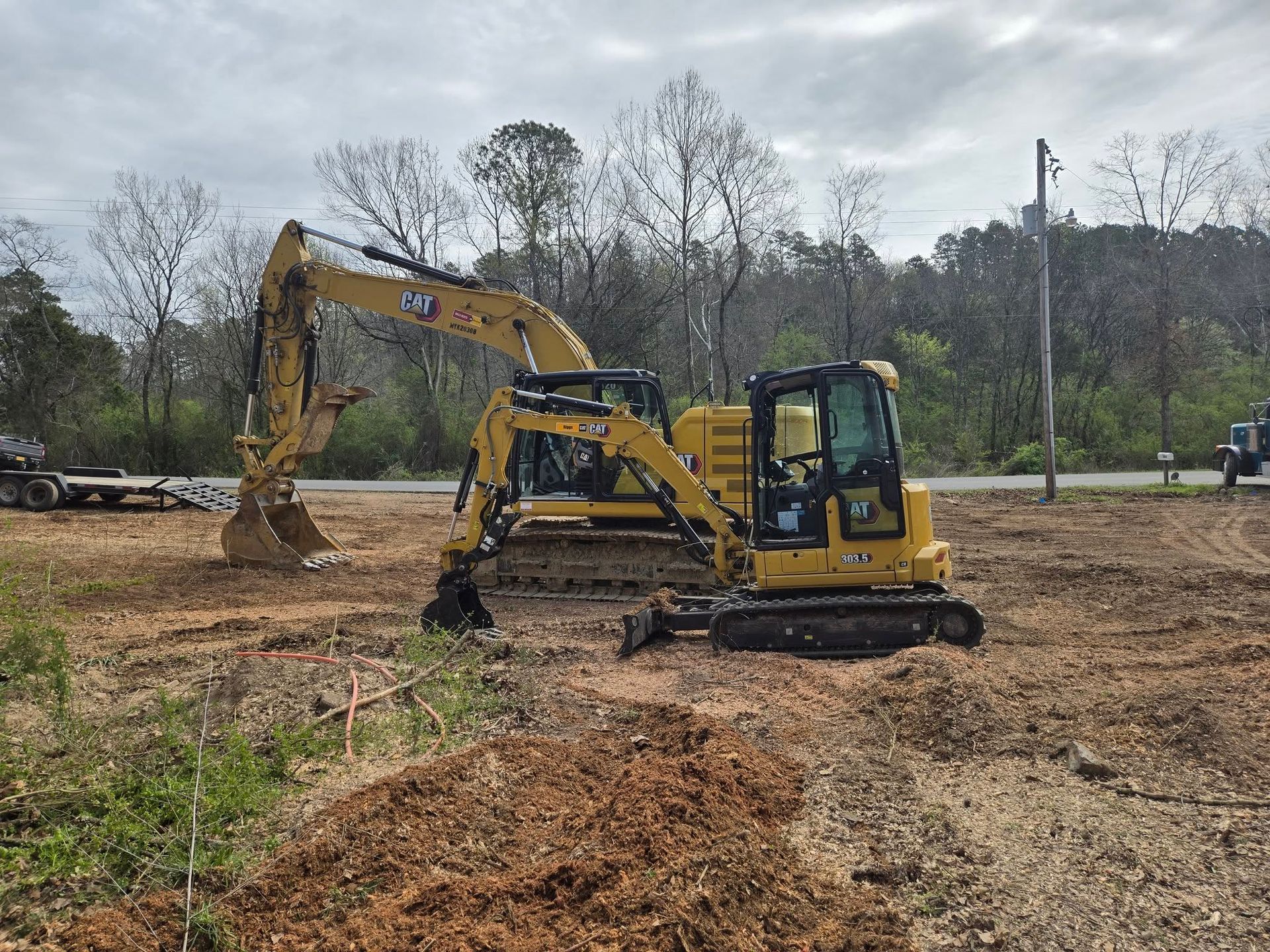

Why Experienced Operators Matter for Project Success
Safe and efficient excavation requires operators who can judge soil stability, maintain grade control, and sequence work to prevent cave-ins or water intrusion during digging. Equipment selection depends on project scale and access—compact machines work in tight residential lots, while larger excavators handle commercial site development where speed and reach determine productivity. Clay soils in this region become plastic and difficult to work when wet, so timing and dewatering methods often influence how quickly excavation can proceed without creating unstable conditions.
When excavation is complete, the site is ready for the next construction phase without delays caused by incorrect grades, unstable sidewalls, or debris left in trenches. You'll see level pads that match foundation dimensions, trenches dug to exact depth and slope for utility installation, and stockpiled topsoil separated from subsoil so it can be reused for final grading. Excavated material is placed where it won't interfere with construction access, and slopes are cut at angles that remain stable until backfilling or permanent grading occurs.
Projects range from small foundation excavations for residential additions to large-scale site development where multiple building pads, access roads, and utility corridors must be excavated and coordinated. Infrastructure work includes digging for water and sewer line installations, stormwater management features, and access improvements that connect properties to public systems or extend service to previously undeveloped areas across the region.
Answers to Frequent Service Questions
Excavation projects involve variables that affect cost, timing, and site conditions, so property owners and contractors often ask about soil handling, grade accuracy, and coordination with other trades.
What happens if rock is encountered during excavation?
Rock excavation requires different equipment or methods than soil removal—sometimes rock can be fractured and removed with hydraulic breakers, but solid bedrock may require blasting or design adjustments to avoid excessive removal costs, and encountering rock always extends project timelines.
How is grade controlled to meet foundation tolerances?
Experienced operators use laser levels or grade stakes to verify depth and elevation continuously during excavation, ensuring the finished pad or trench meets specifications before contractors arrive to install formwork or utilities.
When should topsoil be stripped and stockpiled separately?
Topsoil is stripped and saved whenever final grading will include landscaping or lawn areas, because this upper soil layer contains organic material and structure that support plant growth, while subsoil excavated from deeper layers is unsuitable for vegetation and should only be used for structural fill.
What coordination is required with utility locators before digging?
All underground utilities must be marked by locating services before excavation begins, and operators dig cautiously near marked lines using methods that expose utilities without damaging them—hitting an unmarked or incorrectly marked line causes delays, repair costs, and safety hazards.
How does excavation scheduling affect overall project timelines?
Excavation must be completed and inspected before foundation or utility work can start, so delays in excavation caused by weather, soil conditions, or access problems directly impact every subsequent construction phase, making reliable execution critical to keeping projects on schedule in Hot Springs.
Atlas Excavating prepares sites for construction projects throughout Central Arkansas, using equipment and operators capable of handling residential, commercial, and infrastructure excavation requirements. Contact Atlas Excavating to discuss your site preparation needs and review project specifications.